

My Stuff: Pre-Internet Research Tools
When I wrote a book on Orioles history more than a quarter-century ago, I couldn't summon information with just a couple of clicks. Believe it or not, I managed.

(Note from John Eisenberg: The Bird Tapes grew out of a shoebox filled with microcassettes containing old interviews with former Baltimore Oriole players, managers and executives. The shoebox sat in my office closet, gathering dust, for more than two decades before I pulled it out in 2024 and launched this Substack about Orioles history. Seeing how much subscribers enjoy the Bird Tapes, I thought they might also enjoy reading about other dusty items in that office closet — the detritus of my decades of following and writing about sports. I recently launched a new content stream, titled My Stuff, with a post about my Strat-O-Matic tabletop baseball game. Here’s another.)
There are hundreds of facts, actually probably thousands, in From 33rd Street to Camden Yards, my lengthy oral history of the Orioles, which was published in 2001.
I dug up those facts the old-fashioned way.
Although the Internet was becoming popular in the years when I worked on the book, it was a far cry from the all-encompassing information colossus it would become. I couldn’t tap the sites of future online reference behemoths such as pro-baseball-reference, Baseball Almanac, Retrosheet and the Society of American Baseball Research.
Years later, in 2026, it sounds incomprehensible to research a book using “dead tree” sources — made of actual paper. But that’s all I knew how to do nearly three decades ago. (Along the same lines, if you want to amaze a younger person, try telling them you used to navigate driving trips quite successfully before GPS or directional apps such as Google Maps or Waze existed. “There was this thing called a map …”)
Admittedly, I long ago crossed over to researching baseball facts almost strictly online. I relied on pro-baseball-reference.com (easily my favorite) so heavily while writing The Streak, my 2017 book about Cal Ripken Jr.’s Ironman record, that I gave it a shout-out in the acknowledgments.
But it took a lot more than a few clicks to locate and/or substantiate the statistics and facts in From 33rd Street to Camden Yards. These were my sources:
BOOKS
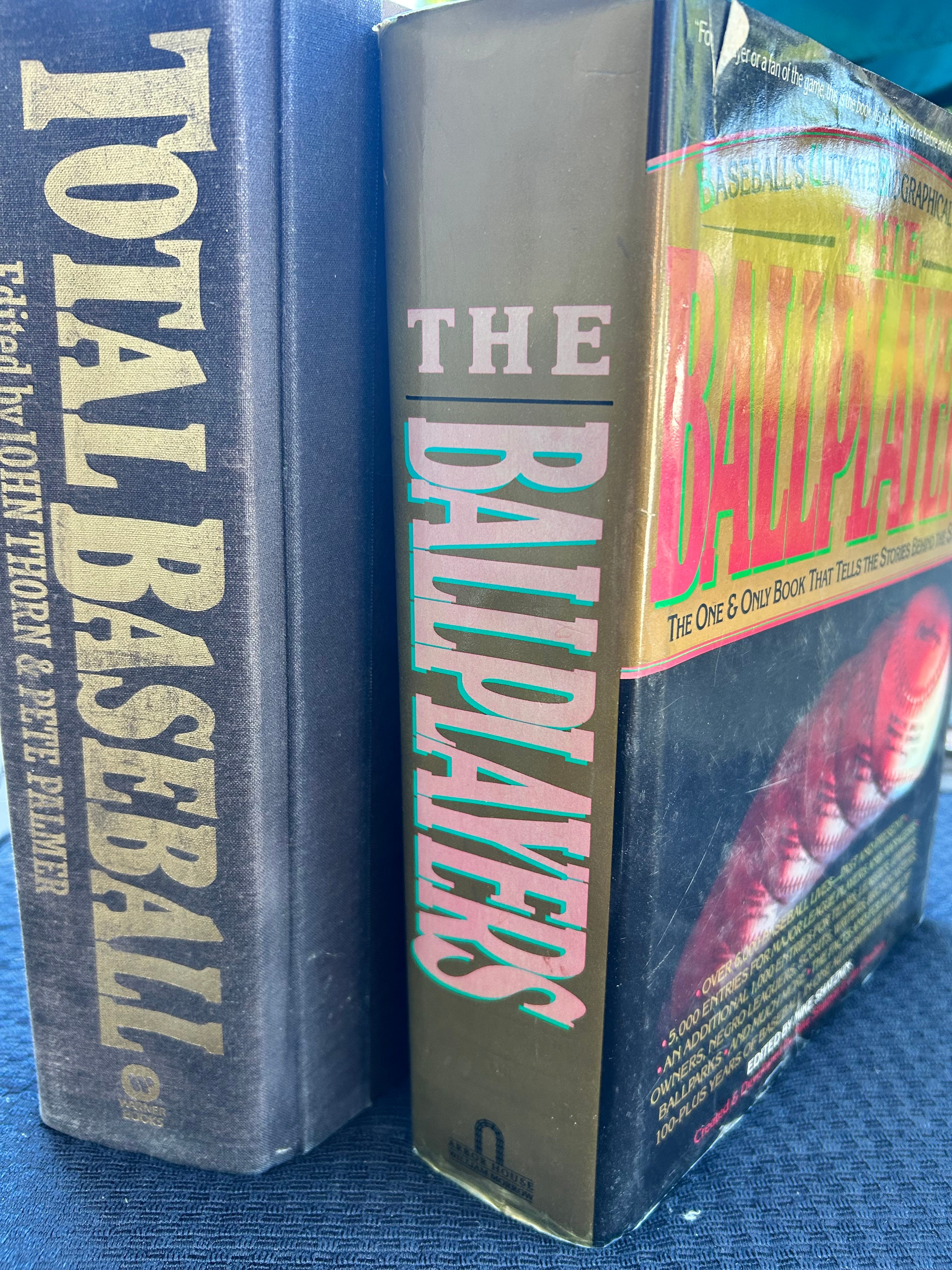
Before the Internet, a couple of thick reference books stood out as trustworthy sources of statistics and facts going back to baseball’s early years.
The Baseball Encyclopedia, first published in 1969, was the sport’s original modern statistical bible. It provided individual yearly statistics for hitters, pitchers and managers going back to the early 1900s.
If you ever needed to settle a bet with a friend about, say, how many 20-win seasons Lefty Grove amassed, it provided the answer.
I didn’t own a copy in high school or college because I wasn’t that far down the statistical rabbit hole, and by the time my journalism career was underway the ‘80s, there was a competitor - Total Baseball, another thick book that had the same stats as well as hundreds of pages of writing on baseball history. (It also featured advanced analytical stats, just beginning their journey to the mainstream.)
I wasn’t covering baseball, but I added a copy of Total Baseball to my library.
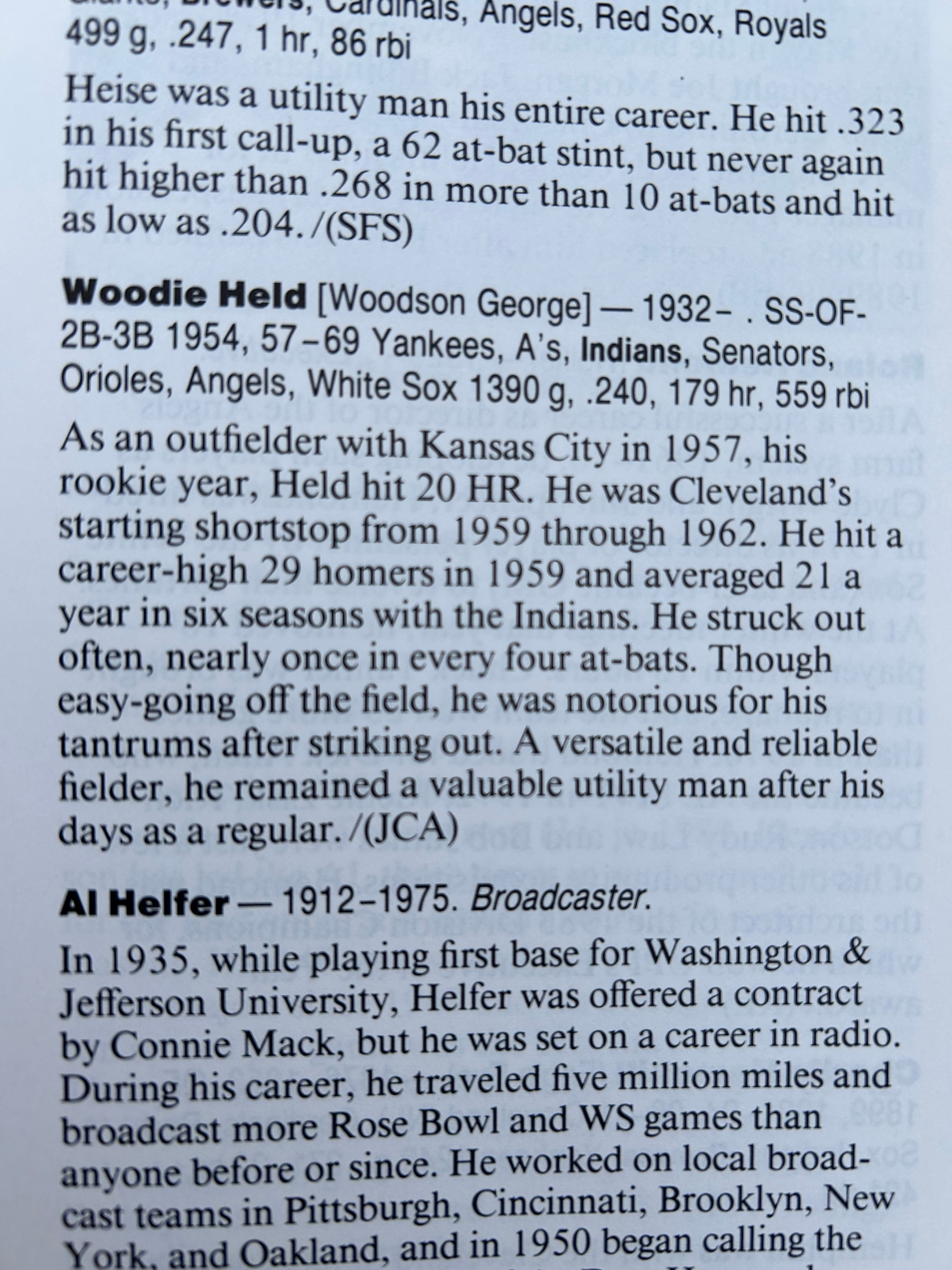
Another thick reference book, The Ballplayers, published in 1990, fit my needs as a writer in search of stories about people. Billing itself as “Baseball’s Ultimate Biographical Reference” and “The One and Only Book That Tells the Stories Behind the Stats,” it featured thumbnail rundowns of more than 6,000 baseball lives, including players, managers, executives, scouts, umpires and more — a wonderful resource in particular as I sought background on bit players in Oriole lore. (Such as Woodie Held, see below.)
MEDIA GUIDES
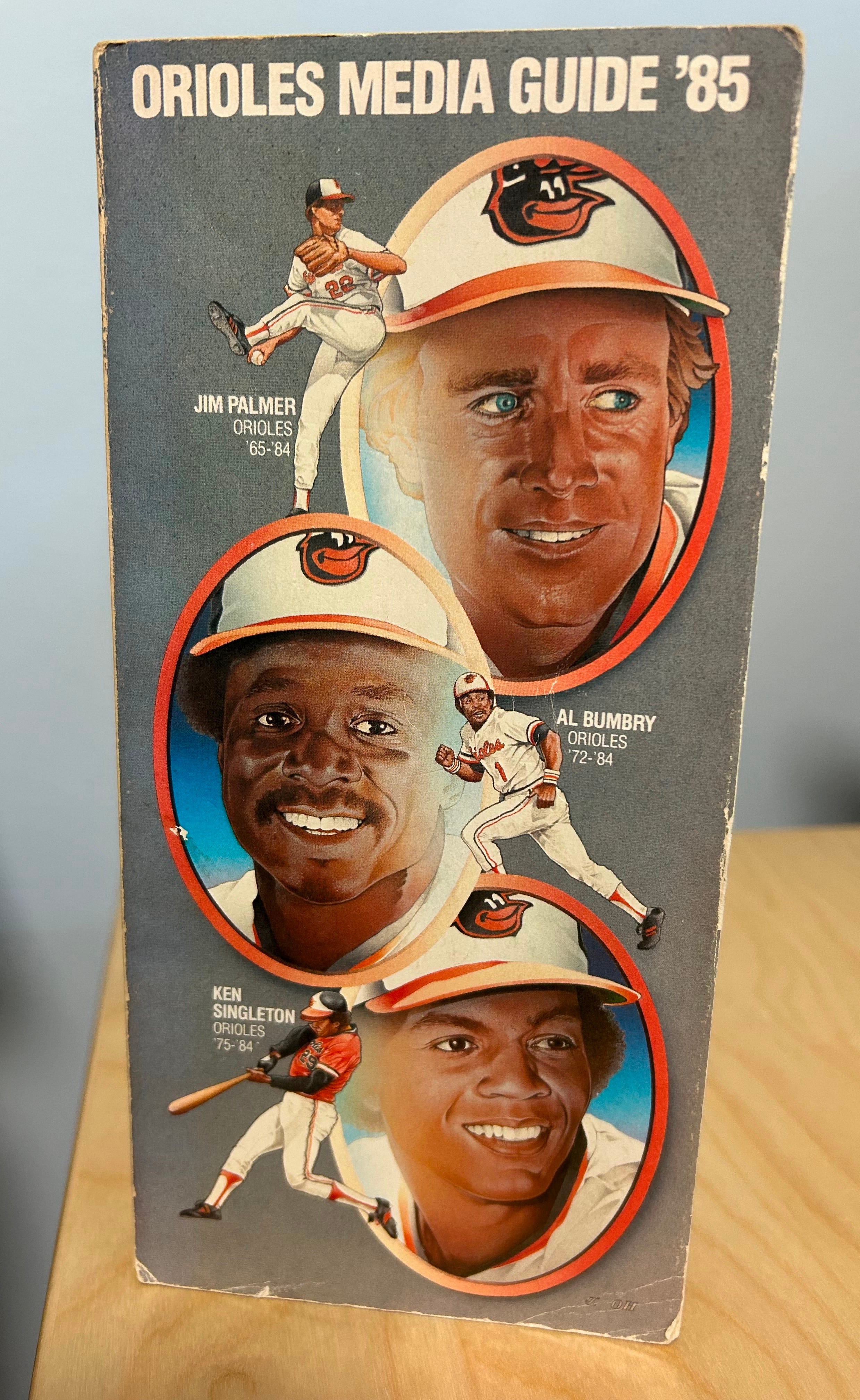
In the years when I was at the Baltimore Sun, writing about the Orioles nearly every day, the club’s annual media guide was indispensable. Full of biographical facts, statistics and club records, it was wide-ranging and accurate, faithfully producing the final word on just about any Oriole-related question.
Through the ‘80s, being put on the cover was an honor, symbolic of a high place in the organization. Interestingly, the 1985 cover (pictured above) was used as a valedictory, featuring three players who were no longer on the team but had formed cornerstones seemingly forever. (At some point in the ‘90s, teams across baseball stopped putting players on media guide covers because agents were using the honor as leverage in salary negotiations.)
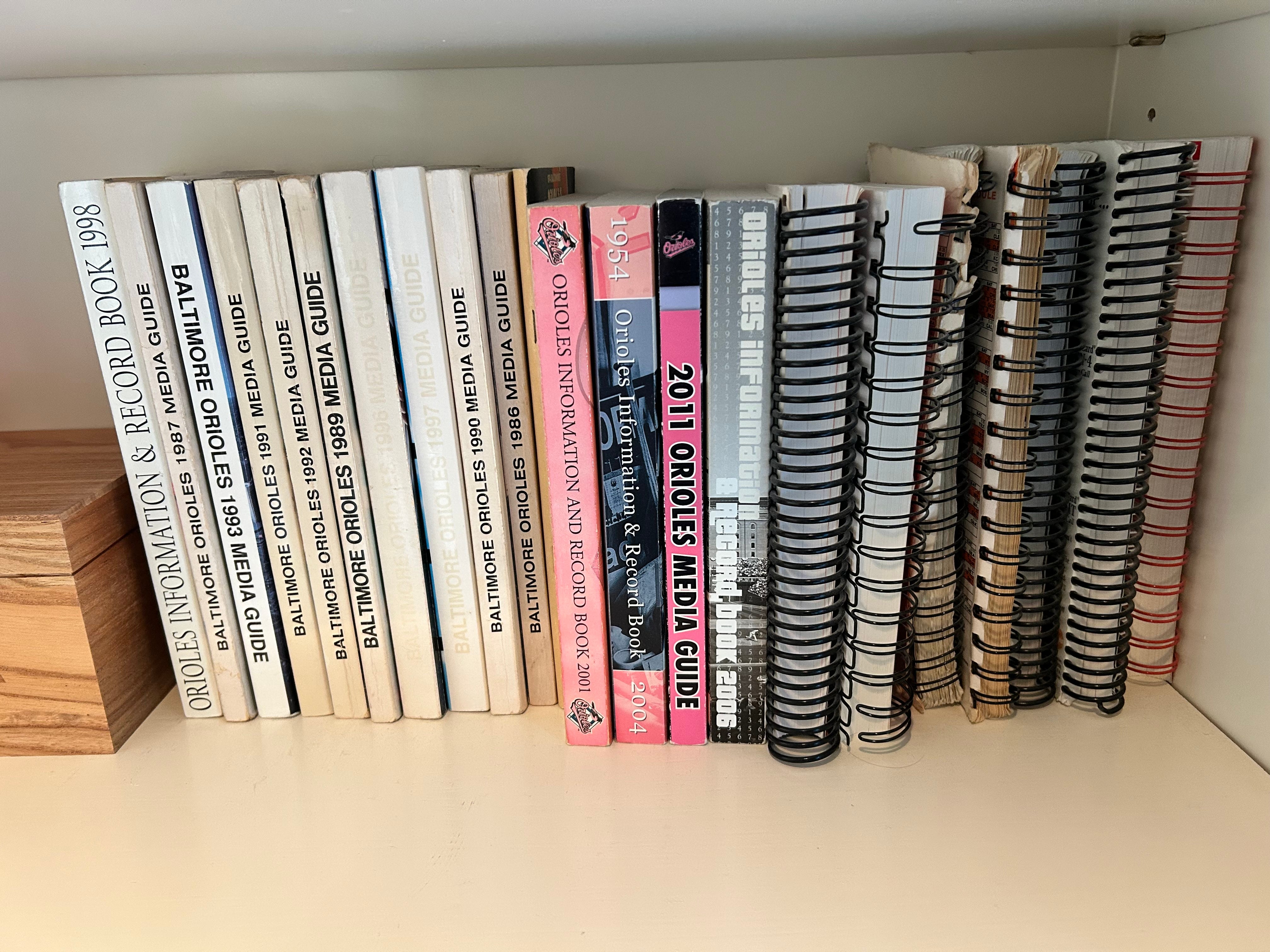
By the late ‘90s, when I started working on From 33rd Street to Camden Yards, I had a nice library of media guides. (See the picture at the top of this post.)
MYSTERY BINDER
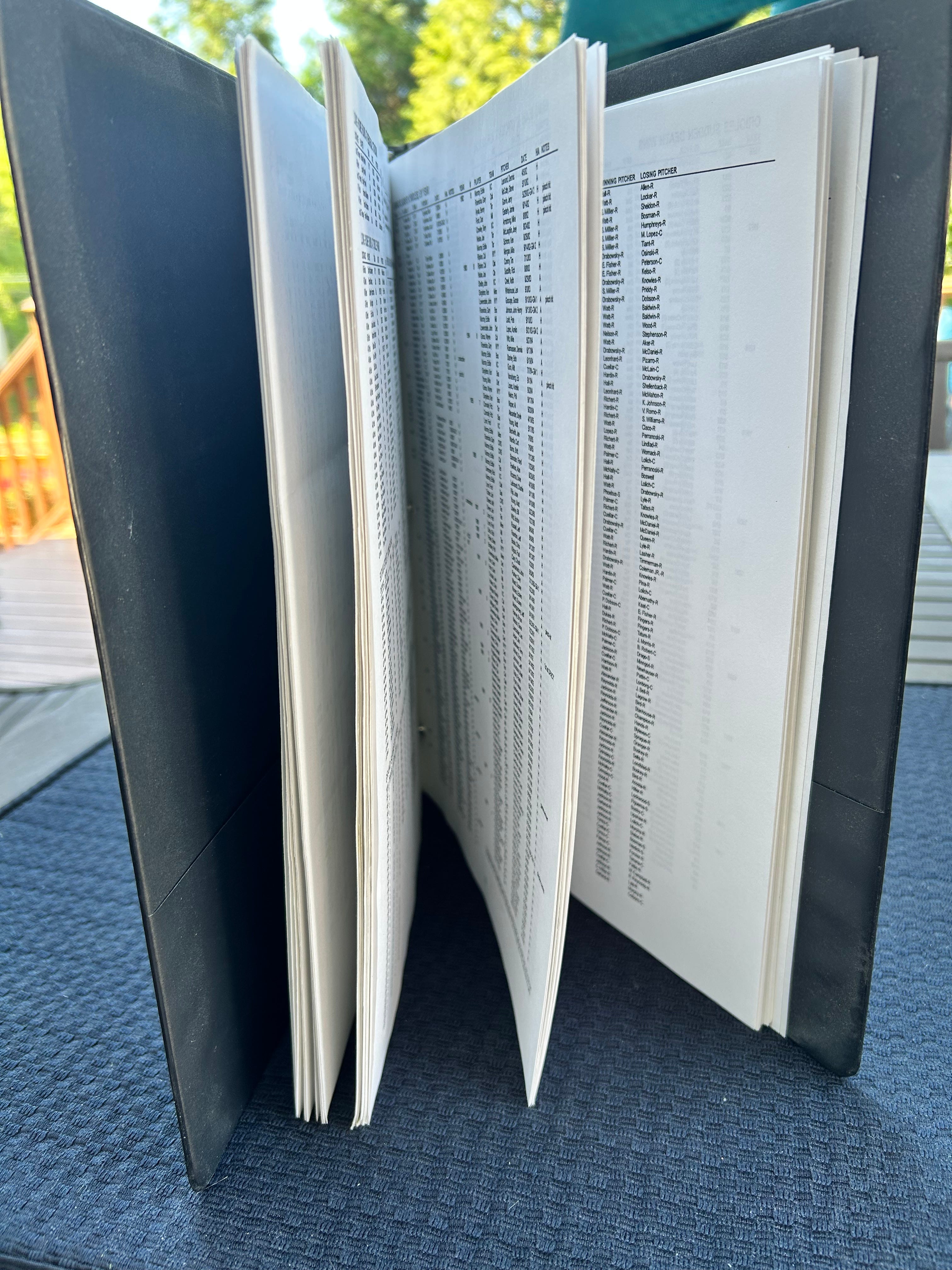
As useful as my media guide collection was, it was incomplete as a research source for my book. From 33rd Street to Camden Yards covered nearly five decades of Oriole baseball starting in 1954, when the Orioles arrived in Baltimore from St. Louis. But I didn't arrive in town and start acquiring media guides until 1985.
I needed a research resource covering the club’s first three decades.
Enter the mystery binder.
It was a standard black binder, an Office Depot special, containing 110 mimeographed pages of Orioles history, all hole-punched into place. Individual batting and pitching statistics going back to 1954. Day-by-day results from every season. Details on postseason play. Fielding statistics. Attendance records.
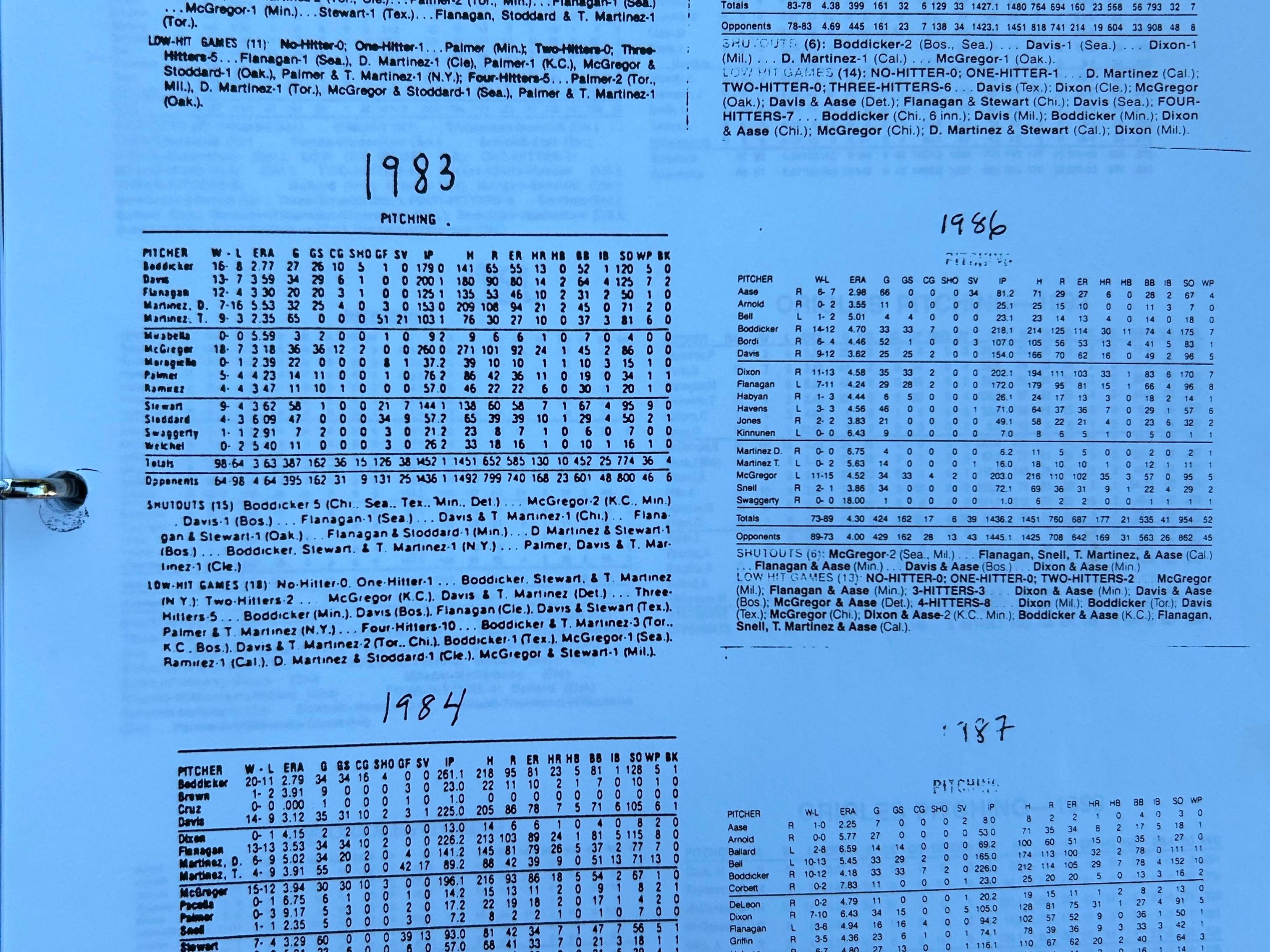
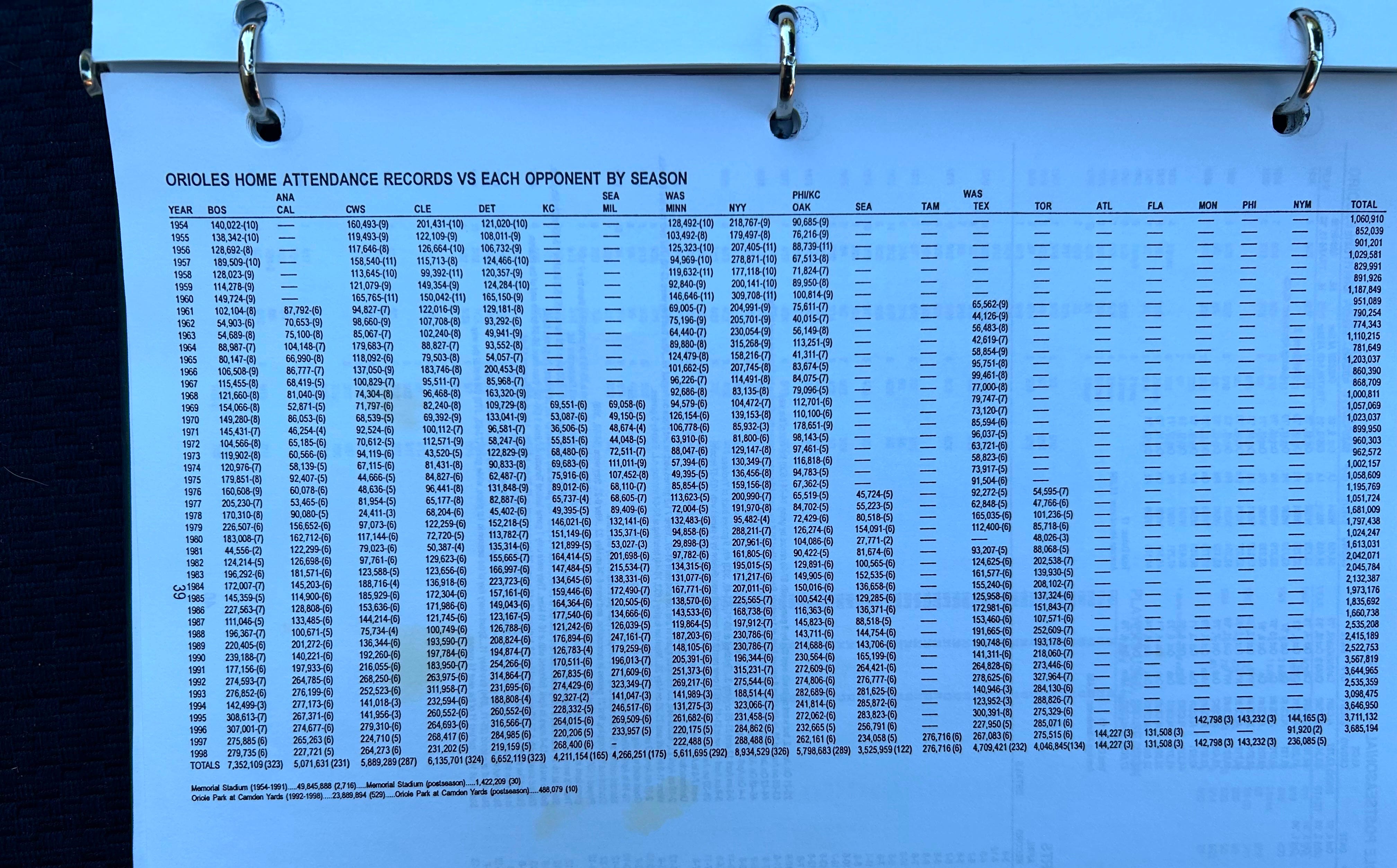
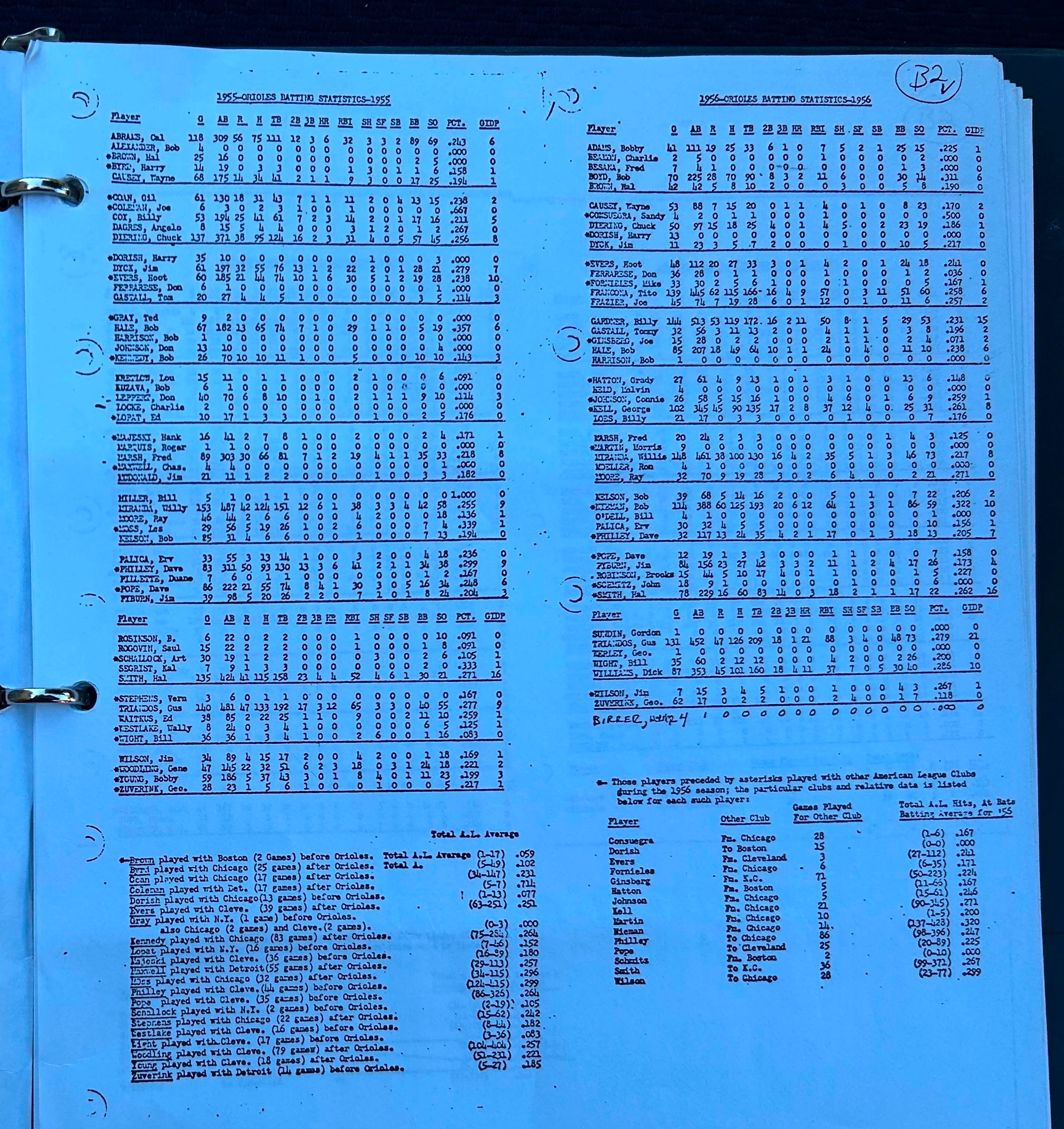
I call it a mystery now because, embarrassingly, all these years later, I’m not 100 percent sure where it came from. (Hey, it was nearly three decades ago.) My best guess is Bob Brown gave it to me once he heard I was working on a book about the history of the Orioles. I got along well with Brown, the Orioles’ legendary head of media relations, who was in his final years when I arrived in town. One of the goals of his life was to have any Oriole media project rest on a bed of accuracy, and I had a long conversation with him about what I was undertaking. (I did interview him for the book, but only briefly.) I have a vague memory of him leaving the binder at my desk in the press box one day shortly thereafter.
In hindsight, such a generous and wonderful gift — a handcrafted, one-of-a-kind reference resource.
I still have it.